

Purpose
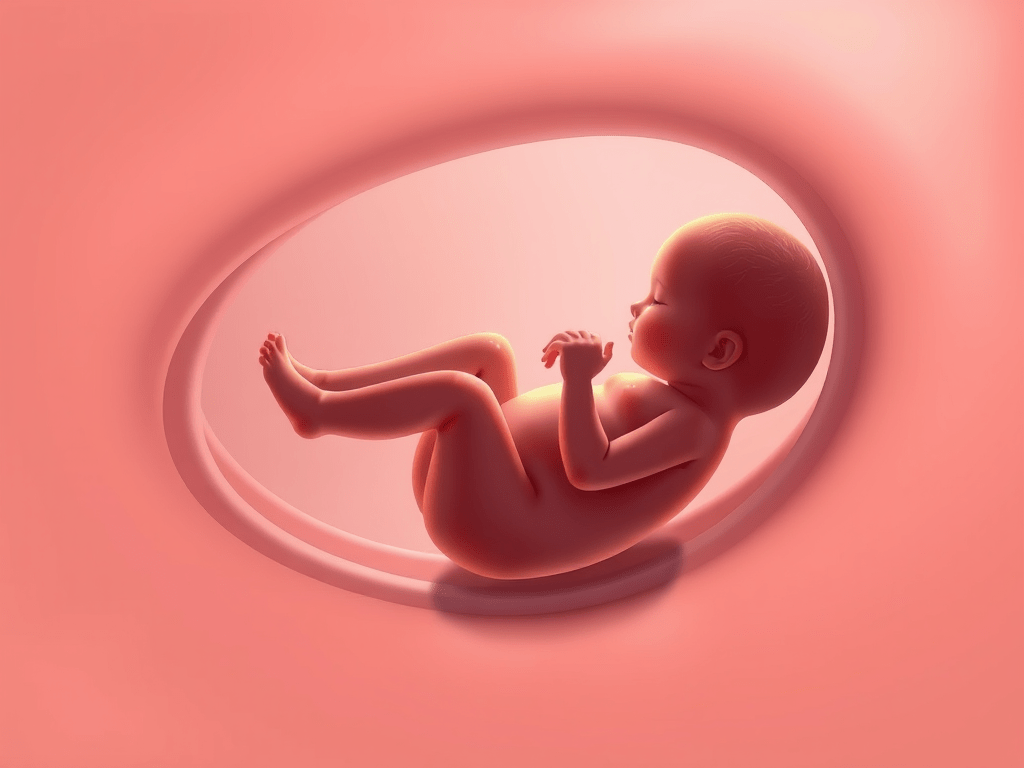
Fetal Rescue and Adoption’s purpose is to develop and provide additional solutions for expectant women who do not want their child – solutions that are both pro-life and pro-choice.
We believe that human science and God’s sovereignty for human life can and should be harmonious with the beginning stages of human life whenever possible and practicable.
We support developing additional solutions that rescue the fetus by keeping the living fetus alive, such as, but not limited to:
A. Fetal Adoption by a willing mother, whereby the living human fetus can be transferred (transplanted) from the woman who does not want to carry the fetus to birth to the mother who wants to carry the fetus to birth.
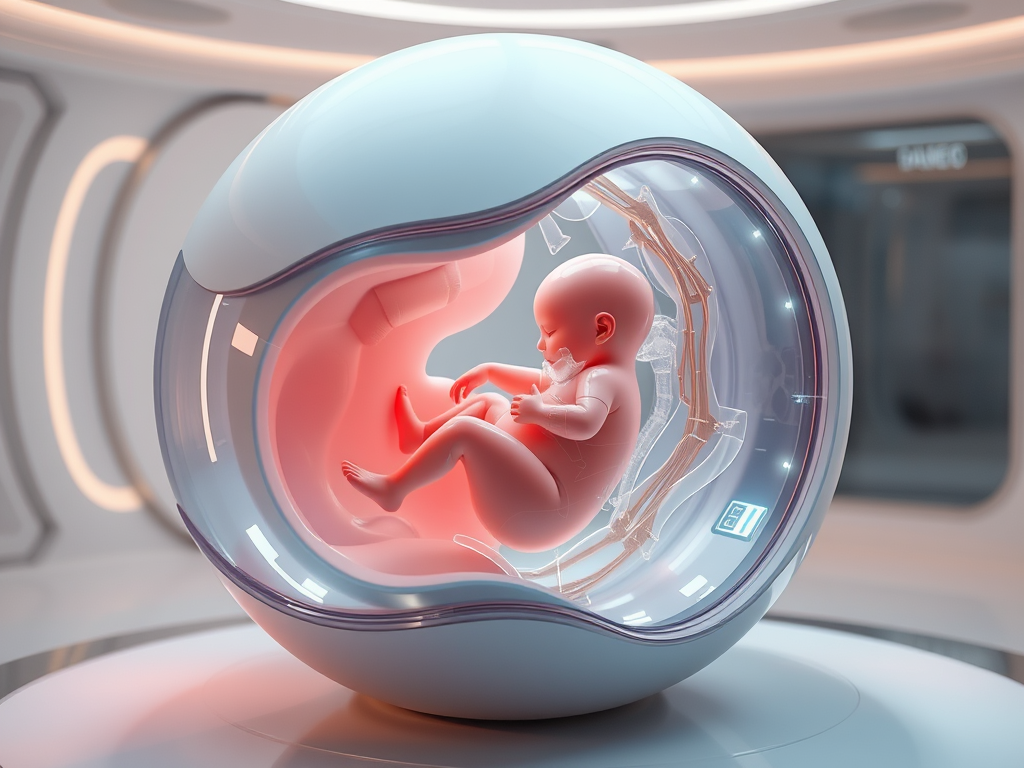
B. Fetal Adoption by artificial womb, whereby the living human fetus can be transferred (transplanted) from the woman who does not want to carry the fetus to birth to an artificial womb.
The reasons why the founding directors established Fetal Rescue and Adoption
As of 2025, when Fetal Rescue and Adoption was founded, a pregnant woman who did not want her child had only two solutions available to deal with the human fetus that lived within her: 1. carry the fetus to full term and give the baby up for adoption, which is supported by pro-life organizations and other entities based on moral issues; or 2. terminate the pregnancy by any form of abortion, which is supported by pro-choice organizations.
Significant advancements had been made in transplanting human organs and limbs.
Fetal adoption by transfer (transplant) would be defined as a transplant of a living human fetus from one woman’s reproductive parts into another woman’s prepared womb, whereby the receiving woman would be the birth parent at the time of actual birth. The concept of fetal transplant and adoption is in its infancy, with the need for advanced technology and legal terms and definitions that require clarity.
In September 2014, the world’s first baby was born to a mother with a transplanted womb, making headlines around the globe. [09/04/2025 BBC, https://www.bbc.com/audio/play/w3ct74jp]
Per an interview with the Mayo Clinic in 2017, fetal surgery is advancing significantly. [03/18/2017, Fetal Surgery: Mayo Clinic Radio; Fetal Surgery: Mayo Clinic Radio – YouTube]
In December 2021, a fetal open heart surgery was successful in Cleveland Ohio USA. [12/25/2021, Rare Fetal Heart Surgery]
Significant advancements have been made in the development of artificial wombs.
In 2017, a fluid-filled ‘biobag’ allows premature lambs to develop outside the womb [04/25/2017, https://www.science.org/content/article/fluid-filled-biobag-allows-premature-lambs-develop-outside-womb]
Artificial wombs are nearing human trials. But the goal is to save the littlest preemies, not replace the uterus. [09/29/2023, by Cassandra Willyard, Everything you need to know about artificial wombs | MIT Technology Review]
In 2025, Chinese researchers announced that they were developing a humanoid robot with an artificial womb designed to replicate the entire process of human pregnancy—from conception to birth. The artificial womb, filled with synthetic amniotic fluid and connected to a nutrient delivery system, was intended to support fetal growth through a full-term gestation. [09/08/2025 https://www.theweek.in/health/more/2025/08/30/chinas-artificial-womb-robot-a-glimpse-into-future-of-human-birth.html#google_vignette]
In 2025, Japan developed the world’s first complete artificial womb capable of supporting mammalian embryos from early stages to birth. This is not an incubator, but a synthetic uterus that mimics every function of gestation outside the human body. (05/27/2025 https://www.kolapse.com/en/contenido/85636-japans-artificial-womb-and-the-future-of-reproduction]
In 2025, the Dutch introduced the AquaWomb to keep a baby alive outside the womb using amniotic fluid rather than an oxygen respirator. [11/05/2025, The Guardian, by Lucy Tu, This machine could keep a baby alive outside the womb. How will the world decide to use it? | Infant and child mortality | The Guardian]
Technologies can be advanced further and then be applied to rescue some of the fetuses that are destined for abortion.
“I can’t save all the babies,” he said, “but the percentage of loss is not large,…”
Martin Couney never earned an actual doctorate. However, he was the first American to offer specialized treatment for them (premature babies) and could boast, toward the end of his career, that out of 8,000 in his care, 6,500 survived. [06-07/1981, Richard F. Snow, https://www.americanheritage.com/martin-couney]
Couney created and ran incubator-baby exhibits on the island [Coney Island] from 1903 to the early 1940s, and though he died in relative obscurity, he was one of the great champions of this lifesaving technology. [07/21/2025, William Brangham, https://www.pbs.org/newshour/health/coney-island-sideshow-advanced-medicine-premature-babies]
Do you have a heart for the unborn? If your answer is Yes, then volunteer with Fetal Rescue and Adoption
Utilize your existing skill set, acquire new skills, or leverage your leadership abilities to advance and apply science to help keep the little ones alive.
Fetal Rescue and Adoption will be an agent of transformation – changing the communities in which its volunteers live, changing the lives of
those whose volunteer efforts affect, and ultimately, change the lives of volunteers themselves.


Fetal Rescue and Adoption plans to grant funds, when available, for technology advancement, research and development, fetal adoption cost offsets, and etc.
Grant Donations – you may choose to donate funds to be used for grants.
Make a one-time donation
Make a monthly donation
Make a yearly donation
Choose an amount
Or enter a custom amount
Your contribution is very much appreciated.
Fetal Rescue and Adoption is organized exclusively under section 501(c)(3) of the Internal Revenue Code for charitable, religious, and educational purposes, including, for such purposes, the making of distributions to organizations that qualify as exempt organizations under section 501(c)(3) of the Internal Revenue Code. Your donation is tax-deductible.
Your contribution is appreciated.
Your contribution is appreciated.
Grant Applications
You may request a funding grant for technological advancements, research and development, or to offset the costs of fetal adoption.
Your donation is crucial to rescuing the unborn children.
Help Fetal Rescue and Adoption with the administrative fees for using this site for donations. Please consider contacting leadership@fetalrescueandadoption.org for information on where to mail a paper check or for account information for bill pay from your financial institution to ours.



You must be logged in to post a comment.